



How to Spot Puffins on a UK Island: A Seasonal Guide for Beginners
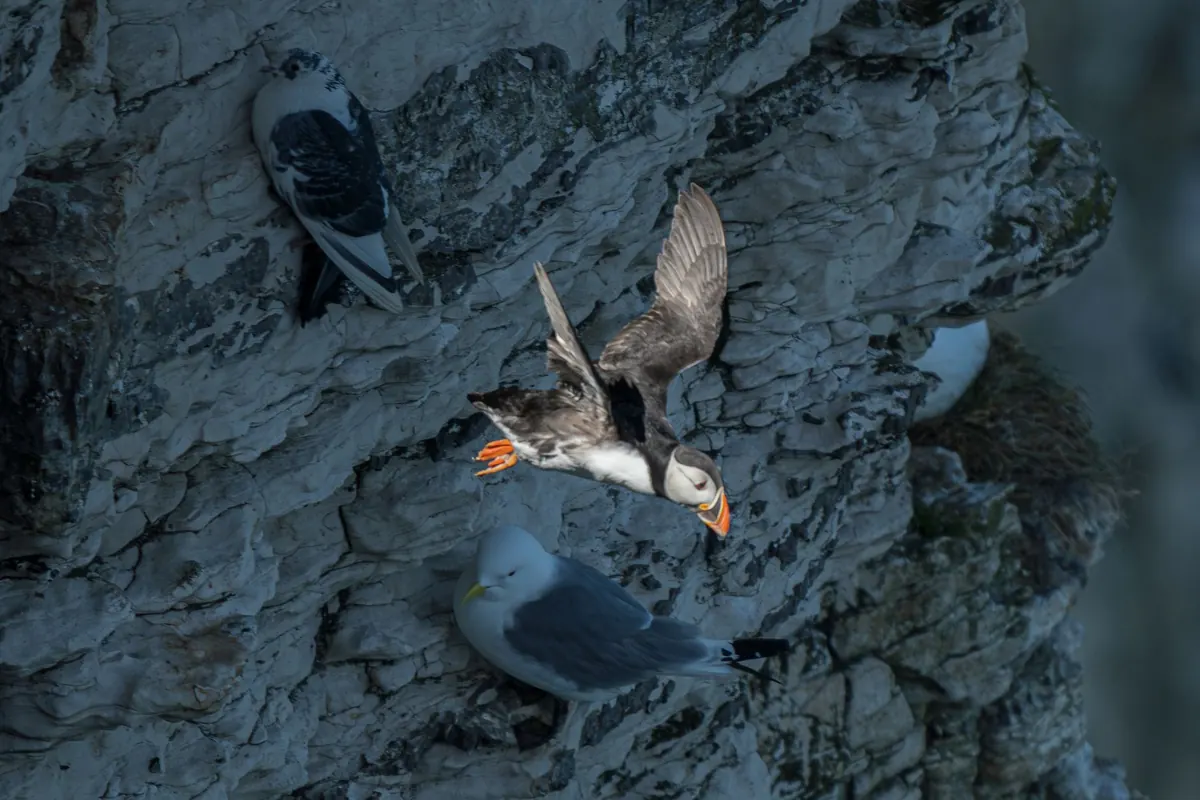
Few birds deliver quite like the Atlantic puffin. It turns up on our islands each spring looking faintly ridiculous — a small, upright bird in black and white, with a beak like painted china — then vanishes to spend the rest of the year alone at sea, often hundreds of miles from land. Between roughly April and July you have a genuine chance of seeing one. Here is how to do it well: when to go, where to stand, and how to watch without causing the birds any harm.
When puffins are actually on land
Puffins only come ashore to breed. The first birds usually appear at their colonies from late March, numbers build through April, and the season settles into its best stretch from about mid-May to mid-July. Each pair raises a single chick — a puffling — in a burrow, and by August most adults have gone back to sea. Late summer sightings are usually of a few stragglers, so don't put your trip off until the schools break up.
If you want one reliable window, aim for the first three weeks of June. Adults are busy ferrying sand eels to hungry chicks, which means plenty of birds in the air and on the water, and plenty of chances to watch that famous beak-load of fish.
Time of day and weather
Early morning and late afternoon often give the best views. Puffins tend to gather on the sea in loose flocks — known as rafts — before coming ashore, so scan the water first, then turn your attention to the slopes. Calm, dry days beat windy ones every time; in a strong onshore wind the birds stay out at sea, and you may see very little for your walk.
Where to find puffin colonies in the UK
Britain and Ireland hold some of the most important puffin colonies in the world, and a good number of them are easy to reach. Broadly, they fall into two types: burrow colonies on grassy islands, and cliff colonies where birds nest in crevices and on ledges.
- Pembrokeshire — Skomer, Skokholm and Ramsey Island. Classic burrow colonies with wardens, roped paths and boat crossings from the mainland.
- Northumberland — the Farne Islands, reached by boat from Seahouses. Coquet Island is viewable from the water but you cannot land.
- Yorkshire coast — Bempton Cliffs and Flamborough Head, where you can watch puffins from the clifftop without setting foot on a boat.
- Scotland's east coast — the Isle of May in the Firth of Forth, Fowlsheugh near Stonehaven and the cliffs around the Bullers of Buchan.
- Hebrides and the west — the Treshnish Isles on boat trips from Mull, and the remote outpost of St Kilda.
- Shetland and Orkney — Sumburgh Head and Hermaness among others, with some of the most dramatic seabird cliffs in the country.
- Northern Ireland — Rathlin Island off the Antrim coast, which has a dedicated seabird viewing point.
Cliff sites are the easiest introduction for a beginner: no booking, no swell, and usually a decent café within a short drive. Island landings take more planning and are often booked weeks ahead in June.
Getting close without getting too close
Puffins are unusually tolerant. A quiet, still person standing on a path may well have one waddle within a couple of metres, and that is a genuine privilege. It is not, however, an invitation to push your luck. Burrows are hidden under turf, and a single misplaced boot can collapse a tunnel, bury an egg or block an entrance at the worst possible moment.
- Stay on the path. Boardwalks and ropes are there for a reason, and it is rarely a boring one.
- Keep a few metres clear of burrow entrances. If a bird is waiting to go in with a beak full of fish, stand back and let it finish the job quickly.
- Let the bird set the distance. If puffins stop what they are doing, stare in your direction or begin moving away, you have got too close. Back off and wait.
- Use binoculars rather than your feet. Optics are always the better move.
- Keep noise down and movements slow. No calling to your friends across the colony, no sudden lunges for a photo.
- Leave the dog at home. Many seabird reserves do not allow dogs at all, and those that do expect a short lead.
- Do not fly a drone. Disturbance from the air is a serious problem at breeding colonies.
- Never handle a bird. A grounded puffling is often just resting. Tell a warden and let them decide.
Binoculars: what to buy and how to hold them
You do not need to spend a fortune. A pair of 8x42 or 10x42 binoculars will cover almost everything a puffin trip throws at you. The 8x option is easier to hold steady on a boat or in a stiff breeze; 10x magnifies more but wobbles more too. Look for waterproof, fogproof models, because salt spray and drizzle are part of the deal, and remember that a cheap pair you actually carry beats a heavy one left in the car.
Technique matters as much as the glass. Find the bird with your naked eyes first, then raise the binoculars to your face without moving your head. Brace your elbows on a wall, a gate or the rail of a boat. On a clifftop, pick a fixed point near the bird — a rock, a clump of thrift — focus on that, and wait for the puffin to walk into view rather than chasing it around the frame.
What you are looking at, and what you might confuse it with
In flight, puffins look like small, dark, whirring missiles skimming low over the water: fast wingbeats, no gliding, a blur of black and white. On the sea they sit high and dumpy, like a duck that has been overinflated. Guillemots have slim, pointed bills and sit lower in the water; razorbills are heavier and chunkier, with a thick, blunt bill and no colour. That bright orange, blue and yellow beak is a breeding-season feature — puffins shed the outer plates afterwards and spend the winter looking altogether more sober. In spring, watch for pairs tapping their beaks together, a courtship display known as billing.
Planning your first puffin trip
Treat it as a day out with a purpose rather than a quick stop. Check tides and the forecast, book landings and boat places in advance, and give yourself more time than you think you need — the best sightings often come after twenty quiet minutes of waiting.
- Pack layers, a waterproof, water and sun cream; cliff tops offer very little shelter.
- Take binoculars, and a camera with real zoom rather than relying on a phone.
- Arrive early or late for quieter paths and busier birds.
- Read the reserve signs and follow warden instructions without debate.
- Leave everything as you found it, including any litter you spot from someone else.
Then find a spot, sit still and let the birds come to you. The season is short, and that is precisely what makes a morning spent with puffins worth the planning.
Photo: Howard Senton / Pexels